News

Aug 18, 2025
Q&A: Boosting research with supercomputing
In this Q&A, ICDS co-hires like Ed O’Brien, professor of chemistry in the Eberly College of Science, and Romit Maulik, assistant professor in the College of Information Sciences and Technology, spoke about how they use Roar’s HPC services.
Full Article

Aug 14, 2025
Study offers new insight into mixed virus interactions in plants
New research led by researchers at Penn State examined what happens when two common viruses — tomato spotted wilt orthotospovirus (TSWV) and impatiens necrotic spot orthotospovirus (INSV) — infect the same plant.
Full Article

Aug 11, 2025
New class of protein misfolding simulated in high definition
New computer simulations that model every atom of a protein as it folds into its final three-dimensional form support the existence of a recently identified type of protein misfolding.
Full Article

Aug 05, 2025
Huck names new associate director for graduate education
Penn State Professor of Anthropology David Puts has been named the associate director for graduate education at the Huck Institutes of the Life Sciences.
Full Article

Aug 04, 2025
Research need inspires student opportunity
Unprecedented demand for molecular modeling skills, coupled with a funding award for innovative teaching, leads to the creation of a new course-based research experience for undergraduates.
Full Article

Aug 01, 2025
HGSAC co-chairs recognized for symposium success
The outgoing co-chairs of the Huck Graduate Student Advisory Committee, the body representing graduate students in the six Huck-run degree programs, were recognized for their service at a recent meeting of the Huck Executive Committee.
Full Article
Jul 22, 2025
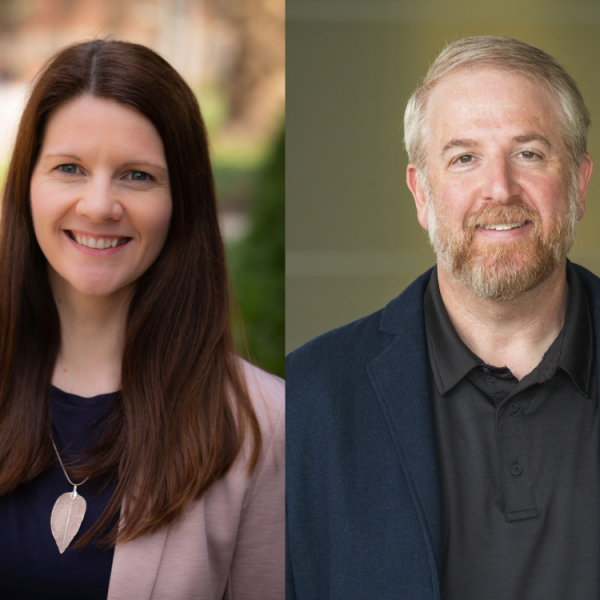
$2.6M NIH grant to fund new microbiome sciences training program at Penn State
The internationally recognized One Health Microbiome Center (OHMC) in the Huck Institutes of the Life Sciences at Penn State is the recipient of a new National Institutes of Health (NIH) grant to train doctoral students in biotechnological innovation, industry advancements and interdisciplinary microbiome research.
Full Article
Jul 16, 2025
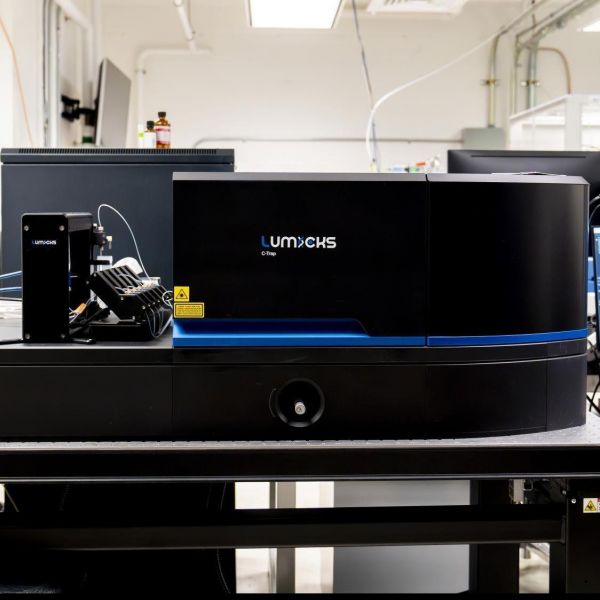
Optical tweezers help elevate single-molecule research at Penn State
The instrument, supported by a new NIH infrastructure grant, uses laser light to ‘tweeze’ tiny objects like DNA molecules and proteins.
Full Article
Jul 14, 2025
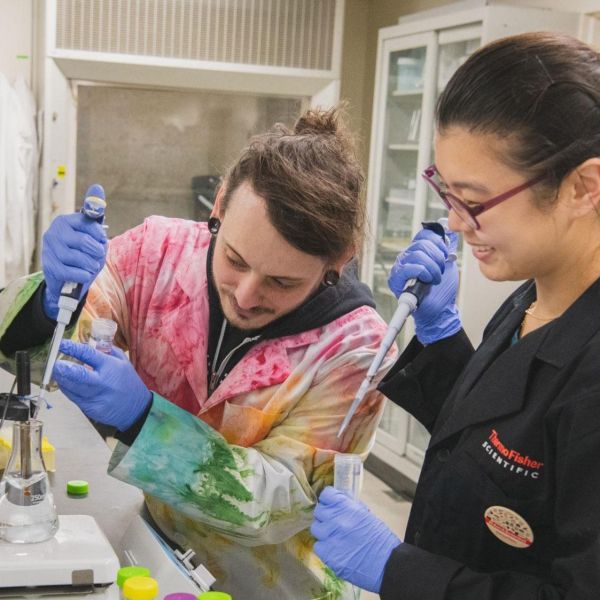
The breadth of the brain
Researchers in the Penn State Neuroscience Institute study the brain’s many aspects in a variety of ways, with implications from mental health to aging and disease.
Full Article
Jul 01, 2025
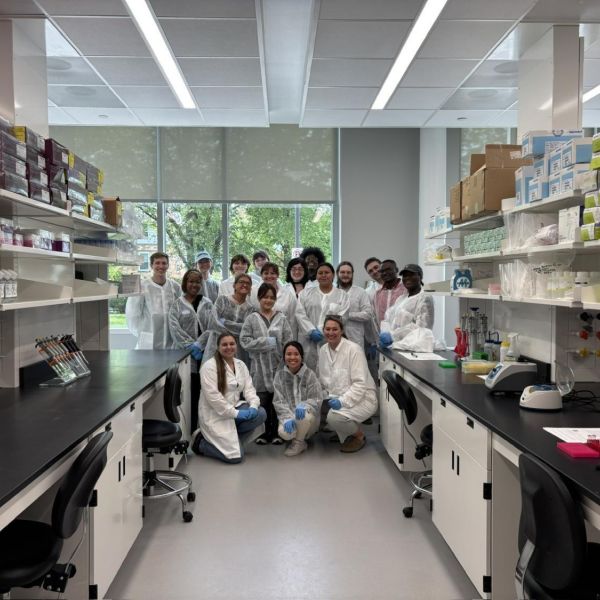
ARISE program provides hands-on training to aspiring anthropologists
A talented group of aspiring anthropologists recently traveled to Penn State to take part in the Department of Anthropology’s annual ARISE program.
Full Article