hero biorenewable

Center for Biorenewables

Building a greener future through innovation and education relating to biorenewable food, chemicals, pharmaceuticals, materials, and energy

Plants for People

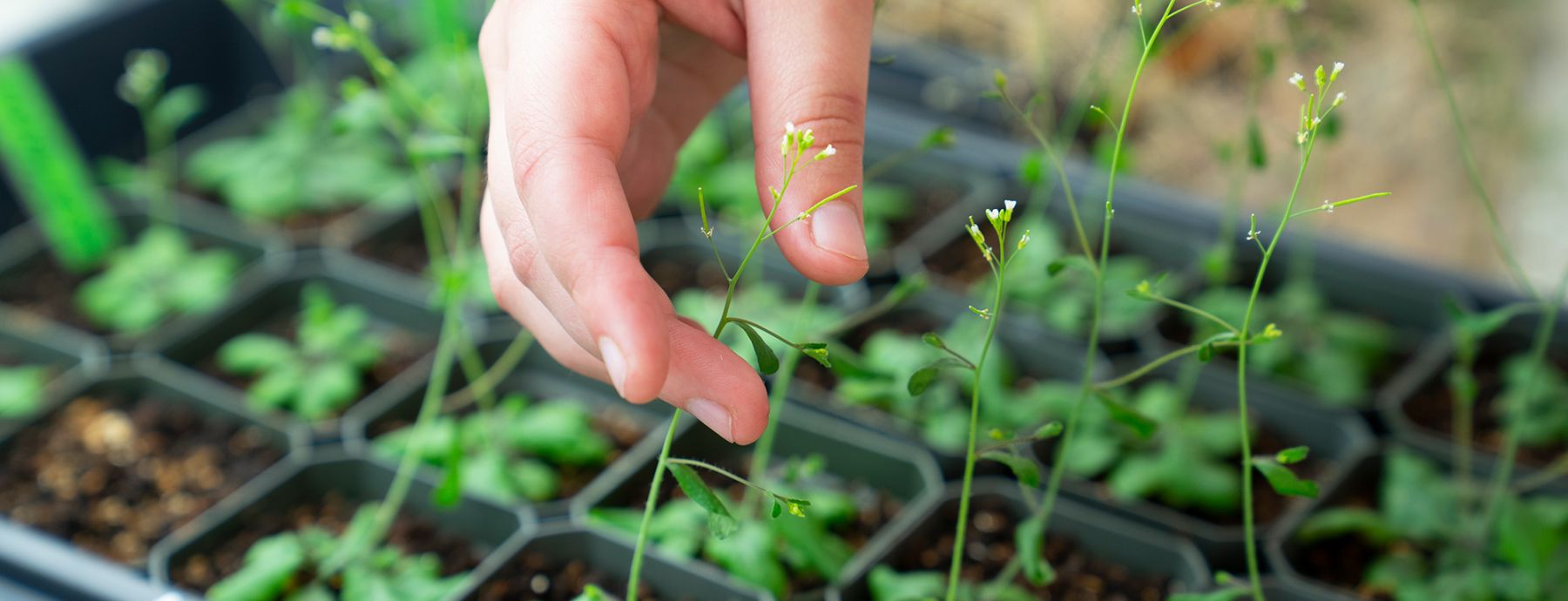
Plants have been used by people for millennia to help meet the basic needs of food, clothing, warmth, and shelter, and have also provided a rich diversity of substances for human health. By harnessing solar power using photosynthesis and evolving a myriad of biosynthetic pathways, plants embody natural chemical factories that produce energy-rich and unique biomolecules.  

Our center seeks to bring together Penn State’s broad expertise in plant biology, genomics, microbiology, chemistry, materials science, chemical engineering, bioengineering, and other related fields to make the discoveries that will enable to plants to meet the current and future needs of human society, sustainably. 

The Center for Biorenewables is jointly funded by Penn State Institutes for Energy and the Environment and Huck Institutes of the Life Sciences.

News

Kaye honored with Graduate Program Chair Leadership Award

Jason Kaye, distinguished professor of soil biogeochemistry in the College of Agricultural Sciences and chair of the Ecology Intercollege Graduate Degree Program, is the 2026 recipient of the Graduate School Alumni Society Graduate Program Chair Leadership Award.

WATCH: Cell ‘snowball’ may be answer to large-scale tissue engineering

Cell cultures — single layers of cells grown in a small dish — have enabled researchers to study biological growth, develop or test drugs and even discover what causes some diseases. Cell spheroids, 3D versions of cell cultures built using a process known as cell aggregation, are the next step in advancing this work, capable of more closely modeling real tissue.

Low-cost sensor system could warn farmers of salt stress in plants

Soil salinity is a critical concern in agriculture when excessive soluble salts restrict a plant’s water uptake, according to the U.S. Department of Agriculture, hindering crop growth and reducing yields on roughly 30% of U.S. irrigated land. Caused by irrigation, poor drainage or saltwater intrusion, soil salinity impacts soil structure, reduces fertility and causes economic losses. To help growers identify and mitigate salt stress, in a proof-of-concept study, a team led by Penn State researchers built a low-cost sensor system that detects signals released by plants in trouble.

Penn State names 14 new distinguished professors for 2026

Penn State's Office of Faculty Affairs has named 14 new distinguished professors for 2026. The distinguished professor or distinguished librarian title recognizes outstanding academic contribution to the University. This special academic title is bestowed upon a limited number of professors who are leaders in their fields of research or creative activity and who have demonstrated significant accomplishments with respect to teaching, research or creative activity, and service.