News

Jul 30, 2024
Craig Praul named director of Huck Core Facilities
Joining Praul on the new leadership team are Rajeswaran Mani, director of the Flow Cytometry Facility, and financial specialist Kelly Foster.
Full Article
Jan 26, 2024
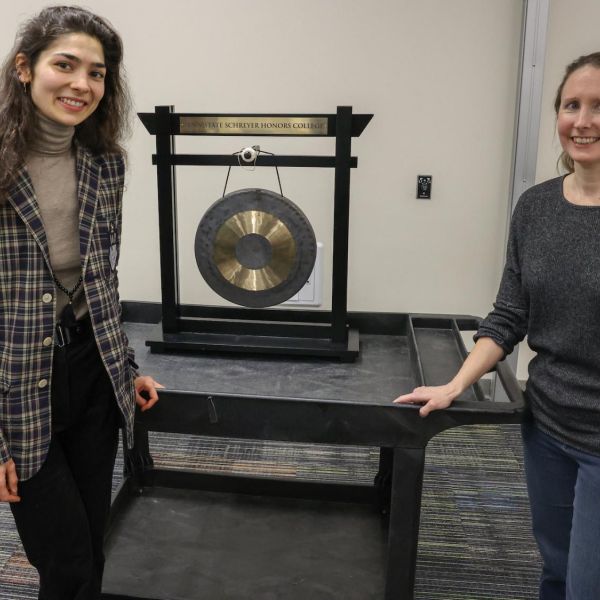
Undergraduate research may contribute to COVID-19 treatments
Brandywine undergraduates worked with professor to investigate potential new therapies to inhibit an enzyme that helps the coronavirus replicate
Full Article

Jan 17, 2022
Core facilities director brings more than technical advice to research
Directors of the core facilities at Penn State’s Huck Institutes of the Life Sciences are more than expert technicians — they are also researchers in their own right. And though their unique contributions are not always consistently recognized within the broader community, faculty researchers who work in the core facilities are well aware of these unsung heroes' many impressive insights.
Full Article
Nov 06, 2018
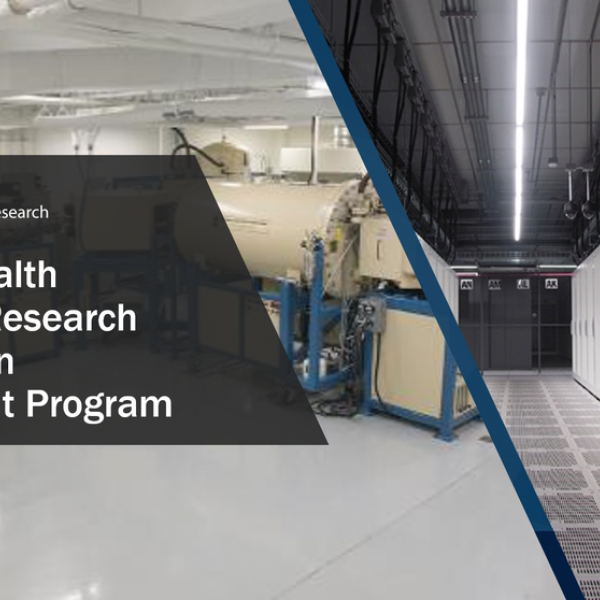
Partnership announced between Commonwealth Campuses and shared facilities
The Office of the Vice President for Research at Penn State has announced the launch of a new program to support increased usage of shared core facilities and services by faculty at the Commonwealth Campuses.
Full Article
Sep 01, 2015
Macromolecular X-ray Crystallography and Automated Biological Calorimetry Facilities Newsletter Summer 2015
Auto-ITC 200 gets a system upgrade VP-Cap DSC has a new heater Next free training sessions for auto ITC, DSC and CD is scheduled for Sept. 24, 2015
Full Article
Jun 18, 2015
Differential Scanning Calorimeter Updated
The automated VP Cap-DSC has undergone a complete overhaul at the factory.
Full Article
Jan 21, 2014
Announcing major equipment acquisitions at the Huck Institutes
The Huck Institutes of the Life Sciences, in conjunction with the Office of the Vice President for Research and the Office of the Provost, are pleased to announce several major equipment acquisitions that will further strengthen the research capabilities of their Core Facilities at University Park.
Full Article
Jan 08, 2013
Automated biological calorimetry workshop deemed a success
The workshop, held on December 13th, 2012, offered informative presentations and technical discussions on automated isothermal titration calorimetry and differential scanning calorimetry.
Full Article
Jan 08, 2013
MicroCal Auto-iTC 200 receives a software upgrade
The upgrade includes a more-robust automatic baseline-fitting algorithm that provides faster and more-accurate results, and better modeling for weak binding.
Full Article
Jan 08, 2013
The Automated Biological Calorimetry Facility has acquired a Millipore Direct Detect bio-molecular quantitation system
The system will expand the Facility's capabilities for analysis of lipid, protein, nucleic acid, and carbohydrate samples as small as 2 uL.
Full Article