Directory Search for "M"

Carol Miller
Professor of Communication Sciences and Disorders
The different pathways that language development can take from childhood into adulthood, using behavioral and electrophysiological methods.
Melanie Miller Foster
Associate Teaching Professor
Educator professional development with a focus on fostering global competence.

Odette Mina
Managing Director, Energy and Environmental Sustainability Laboratories
Fate and transport of emerging contaminants in the environment
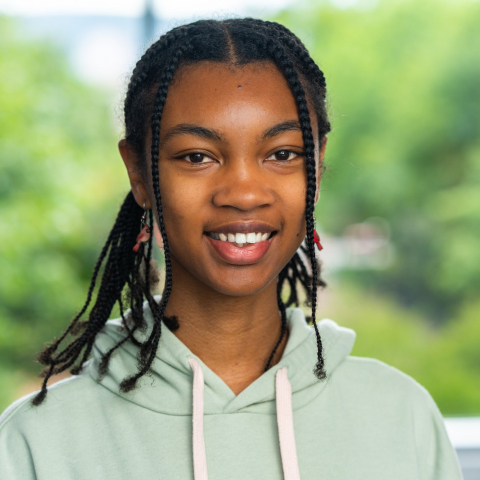
Shubham Mirg
Biomedical Engineering Graduate Student
Multimodal optical and ultrasound neuroimaging techniques and investigation of ultrasound neuromodulation for mental health disorders.
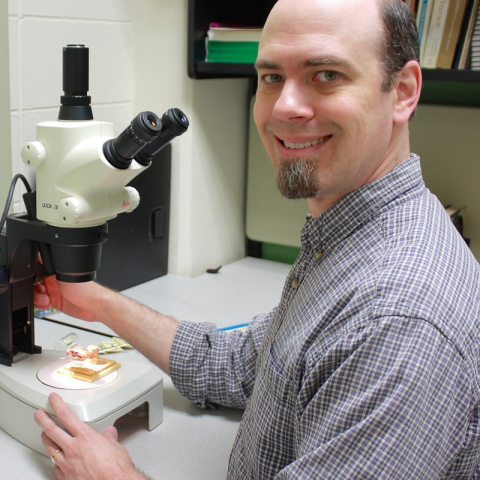
Rob Mitchell
Associate Professor of Chemical Ecology
Entomology, chemical ecology, and chemoreception.
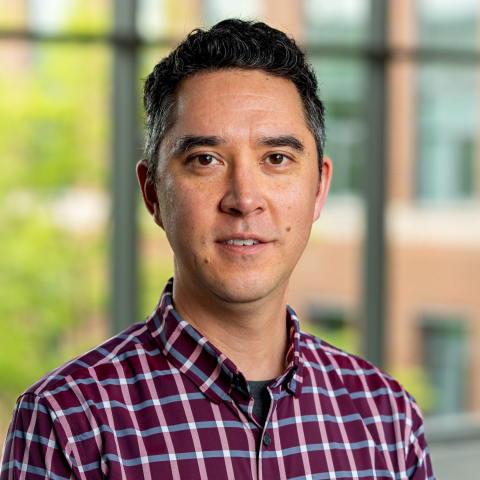
Tim Miyashiro
Professor of Biochemistry and Molecular Biology
How bacteria adapt to a host environment. The mutualistic symbiosis established between the Hawaiian bobtail squid (Euprymna scolopes) and a bioluminescent bacterium (Vibrio fischeri).
Center for Infectious Disease Dynamics

Ipsita Mohanty
Assistant Professor of Pharmacology
At the Mohanty Lab, we seek to decode the chemical language of the microbiome, uncovering how microbial metabolites act as signals that shape host health and disease. By integrating advanced mass spectrometry, large-scale data science, repository-scale mining, machine learning, and biochemical approaches, we aim to systematically map and interpret these molecular messages. Our work focuses on how diet, aging, inflammation, and metabolic diseases rewire this chemical dialogue, with the goal of transforming our ability to read, predict, and ultimately modulate host-microbiome interactions.
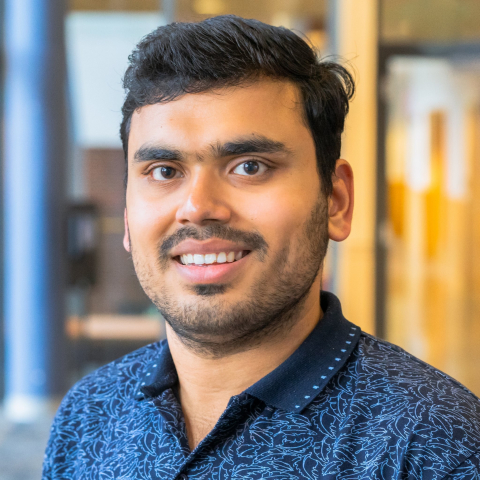



Jean-Michel Mongeau
Assistant Professor of Mechanical Engineering and of Biomedical Engineering
Gabriele Monshausen
Associate Professor of Biology
Plant cell signaling. Hormonal and mechanical signal transduction in plant growth regulation. Live cell imaging of subcellular microdomains of ionic signaling.

Annalisa Montemarano
Neuroscience Graduate Student (Hersey)
Mesocorticolimbic regulation of opioid reward
Felipe Montes
Assistant Research Professor
Modeling of agricultural production systems, greenhouse gas emissions, water quality and environmental impacts; Advanced instrumentation and field research techniques for collecting data to feed the process-based models; Bioenergy and biomass production, green house mitigation, life cycle analysis and carbon footprint determination, whit emphasis on shrub coppice willow