News
Jan 17, 2025
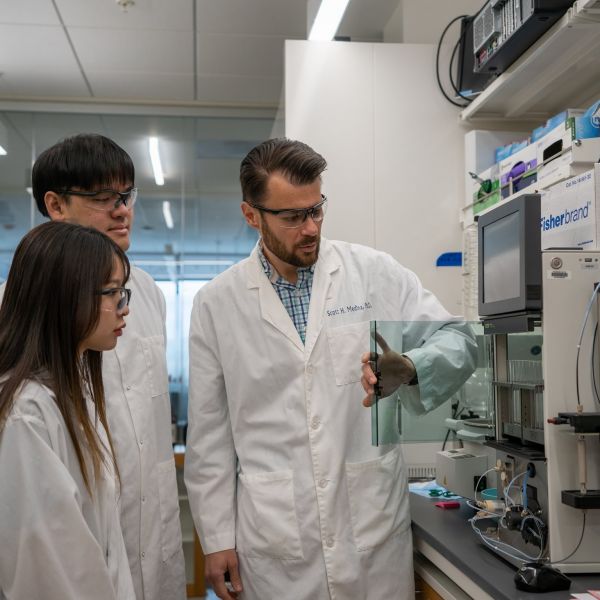
Discovery could eliminate need to refrigerate vaccines and protein-based drugs
A new storage technique can keep protein-based drugs and vaccines stable without keeping them cold. The discovery, led by researchers at Penn State, could eliminate the need for refrigeration for hundreds of life-saving medicines like insulin, monoclonal antibodies and viral vaccines.
Full Article
Jan 06, 2025
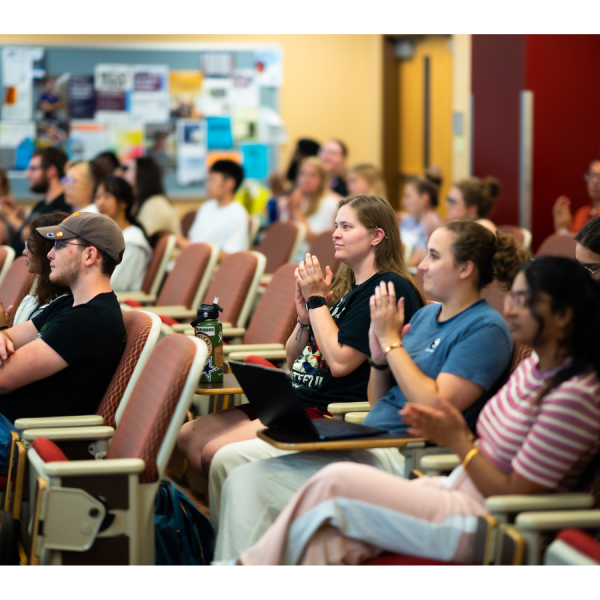
Fourth annual Big Ten Neuroscience Symposium to convene at Penn State
The Penn State Neuroscience Institute, through the Huck Institutes of the Life Sciences and the Penn State College of Medicine, will host the Big Ten Neuroscience Annual Meeting on July 21 and 22 at the Nittany Lion Inn in State College.
Full Article

Jan 02, 2025
Pet dogs often overlooked as spreader of antimicrobial-resistant Salmonella
A team of Penn State researchers have found that household dogs are an overlooked transmission point for zoonotic pathogens such as nontyphoidal Salmonella.
Full Article

Jan 28, 2025
New Annual Summit Focuses on Graduate Student Resiliency
Earlier this month, the Huck Institutes, in partnership with the J. Jeffrey and Ann Marie Fox Graduate School at Penn State, hosted the Inaugural Huck Institutes T32 Summit.
Full Article
Jan 02, 2025
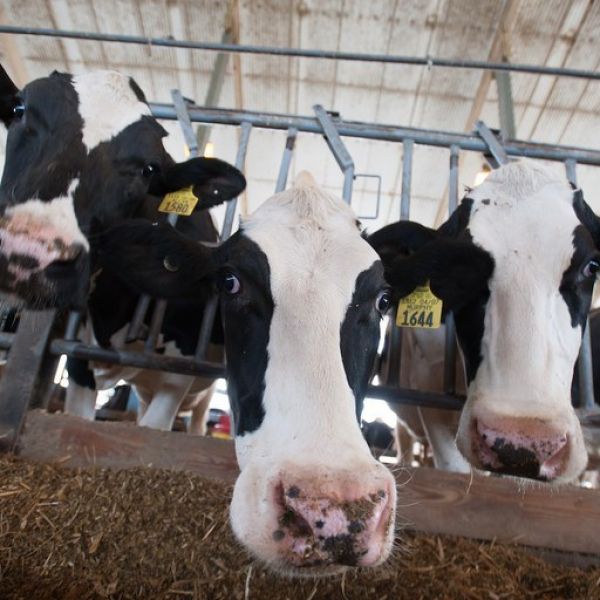
New treatment for dairy cows could help fight antibiotic resistance, study finds
A concentrated sugar solution could be just as effective as antibiotics at treating a common infection in dairy cows, according to a new study led by researchers at Penn State.
Full Article
Dec 18, 2024
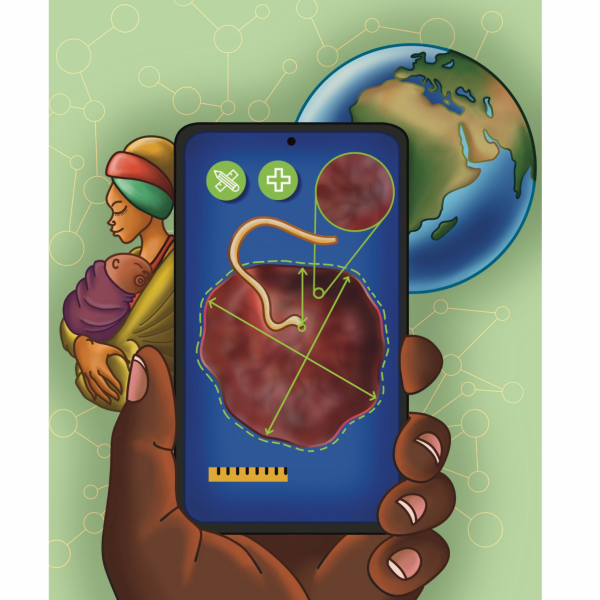
Placenta assessment tool aims to improve neonatal, maternal care
A multi-national, multi-institutional team led by Penn State researchers developed a new tool that enables doctors to examine placentas right at the bedside using just a phone.
Full Article

Dec 16, 2024
Two Huck graduate students receive American Heart Association fellowships
Two Huck graduate students awarded individual 2-year American Heart Association fellowships.
Full Article

Dec 12, 2024
Center for Socially Responsible AI awards seed funding to seven diverse projects
The Penn State Center for Socially Responsible Artificial Intelligence (CSRAI) has announced the results of its most recent seed-funding competition.
Full Article

Dec 10, 2024
Biomedical engineering professor elected American Heart Association Fellow
Keefe Manning, Penn State professor of biomedical engineering with a courtesy appointment as a professor of surgery, was elected fellow of the American Heart Association by the association's stroke council.
Full Article

Nov 20, 2024
Consistent bedtime linked with better child emotion and behavior regulation
Sleep can affect a child’s attitude and behavior, as many parents can attest, but a consistent bedtime may be more influential than sleep quality or duration, according to a new publication authored by researchers in the Penn State College of Health and Human Development and Penn State College of Medicine.
Full Article