News
Feb 07, 2019
Simple drug combination creates new neurons from neighboring cells
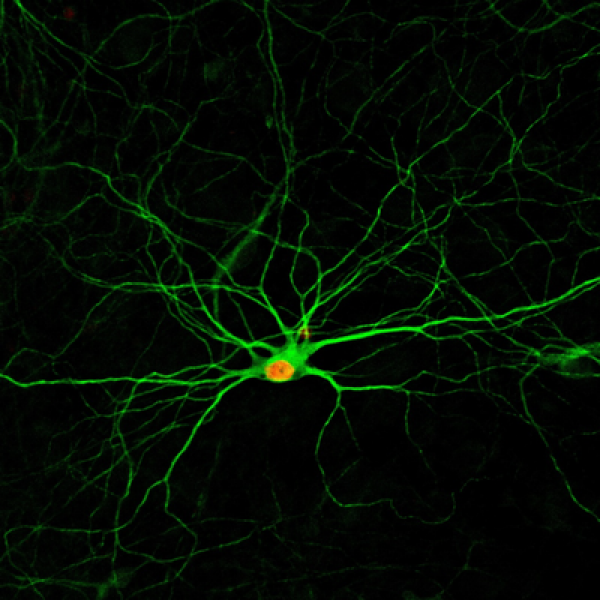
A simple drug cocktail that converts cells neighboring damaged neurons into functional new neurons could potentially be used to treat stroke, Alzheimer’s disease, and brain injuries. A team of researchers at Penn State identified a set of four, or even three, molecules that could convert glial cells—which normally provide support and insulation for neurons—into new neurons.
Full Article

Feb 05, 2019
College of Engineering and Atlantic Council host workshop on strategic foresight
The College of Engineering partnered with the Atlantic Council’s Scowcroft Center for Strategy and Security to host a three-day workshop, a joint initiative to understand the evolving interactions between technology and our economic, political and social institutions, in spring 2018.
Full Article
Jan 31, 2019
Membraneless protocells could provide clues to formation of early life
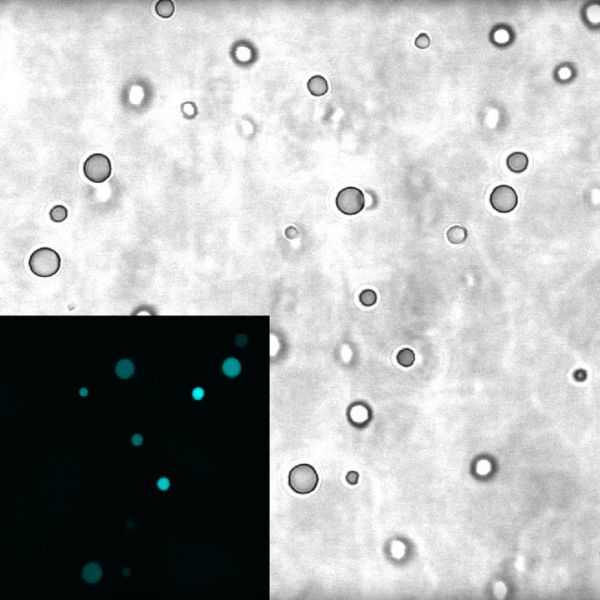
Membraneless assemblies of positively- and negatively-charged molecules can bring together RNA molecules in dense liquid droplets, allowing the RNAs to participate in fundamental chemical reactions. These assemblies, called “complex coacervates,” also enhance the ability of some RNA molecules themselves to act as enzymes — molecules that drive chemical reactions.
Full Article

Jan 30, 2019
Melik Demirel named Huck Chair in Biomimetic Materials
Melik C. Demirel, professor of engineering science and mechanics at Penn State, was recently named Lloyd and Dorothy Foehr Huck Chair in Biomimetic Materials by the University’s Huck Institutes of the Life Sciences.
Full Article
Jan 25, 2019
Prospective Grad Students Get A Taste of Life at Penn State
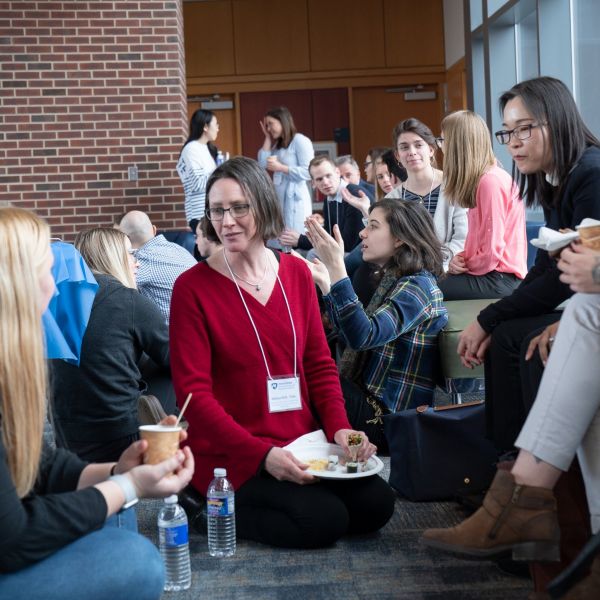
Students interested in the Bioinformatics and Genomics; Plant Biology; Neuroscience; and Molecular, Cellular, and Integrative Biosciences graduate programs were given a warm welcome on a snowy weekend.
Full Article

Jan 25, 2019
Sean B. Carroll to deliver 2019 Darwin Day Lecture
Sean B. Carroll, vice president of science education at the Howard Hughes Medical Institute (HHMI), will deliver the 2019 Darwin Day Lecture titled “The Serengeti Rules: The Regulation and Restoration of Biodiversity” at 3:30 p.m. on Friday, Feb. 8 in 101 Thomas Building. Carroll’s lecture will be followed by a reception from 4:30 to 6:00 p.m. in the Commons on the third floor of the Millennium Science Complex. Both events are free and open to the public.
Full Article

Jan 22, 2019
New method uses ultraviolet light to control fluid flow and organize particles
A new, simple and inexpensive method that uses ultraviolet light to control particle motion and assembly within liquids could improve drug delivery, chemical sensors and fluid pumps. The method encourages particles — from plastic microbeads, to bacterial spores, to pollutants — to gather and organize at a specific location within a liquid and, if desired, to move to new locations.
Full Article
Jan 21, 2019
Having stressed out ancestors improves immune response to stress
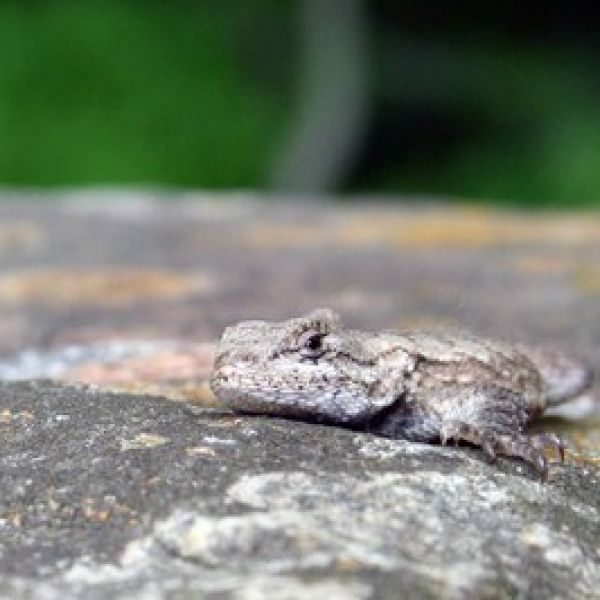
Having ancestors who were frequently exposed to stressors can improve one's own immune response to stressors, according to Penn State researchers who studied fence lizards and their stress response. The results suggest that family history should be considered to predict or understand the health implications of stress.
Full Article
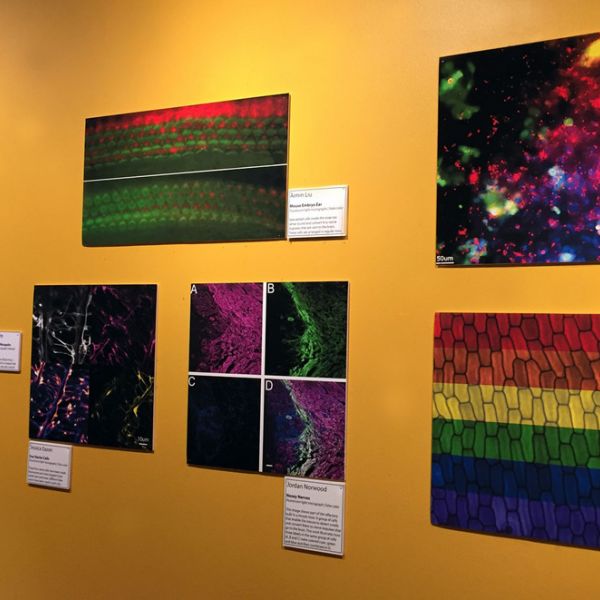
Jan 16, 2019
Discovering the beauty of living cells: Science meets coffeeshop art
A December exhibition at Webster's Bookstore Cafe titled “The Art of Cell Biology,” featured 18 pieces of science-based artwork produced by Penn State research,
Full Article
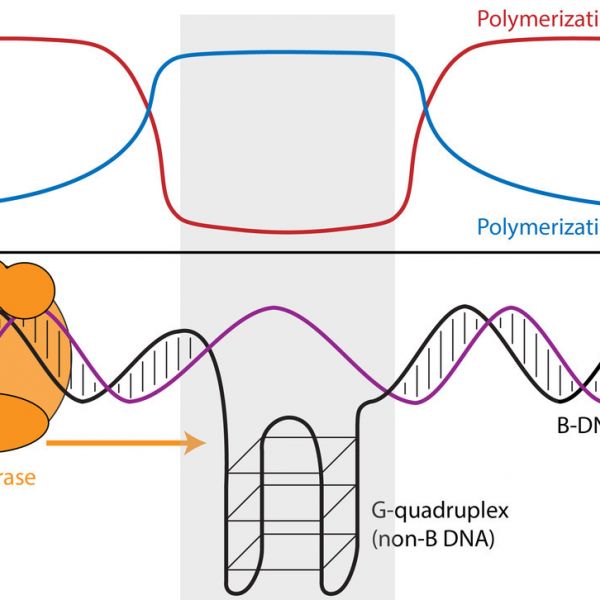
Jan 14, 2019
Differences in genes’ geographic origin influence mitochondrial function
Differences in the geographic origin of genes may affect the function of human mitochondria — energy-generating organelles inside of cells — according to a new study. Mitochondria have their own genome, separate from the nuclear genome contained in the nucleus of the cell, and both genomes harbor genes integral to energy production by mitochondria. The study explores whether these “mito-nuclear” interactions, which are fine-tuned by natural selection over deep evolutionary time, could be altered when genes of different geographic origins are brought together within a genome.
Full Article