News
Mar 13, 2019
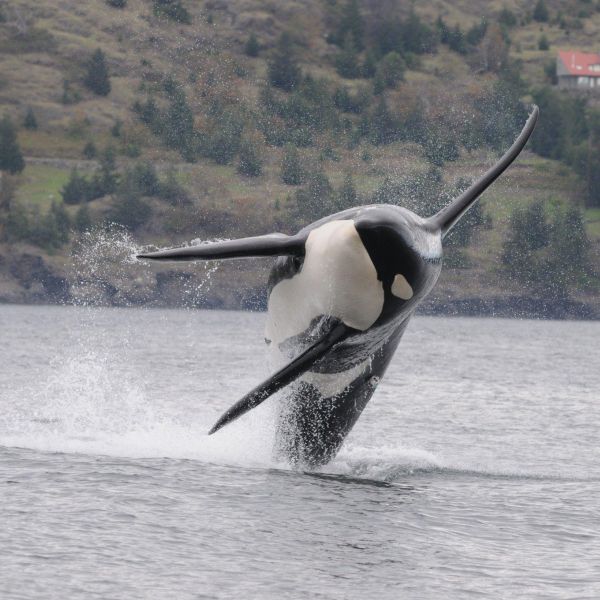
Ecology Alum Jennifer Tennessen Brings Acoustics to Killer Whale Conservation
Dr. Jennifer Tennessen applies the lessons of her interdisciplinary research at the Huck to her professional work with killer whales in the Pacific Northwest.
Full Article

Mar 12, 2019
Heard on Campus: Paul Perreault at the Penn State Forum
Paul Perreault, chief executive officer and managing director of CSL Limited, the second largest biotherapeutics company in the world with more than 22,000 employees, presented “Innovation in Biotechnology: The Promise, The Potential, The Pitfalls” at the Penn State Forum on March 12 at The Nittany Lion Inn.
Full Article

Mar 06, 2019
Sensory tests suggest 'liking' wines made with native grapes a learned response
Consumer preference or aversion to wines made from native grapes — such as Concord, Niagara and Catawba, which are grown in North America — may depend on early exposure to the fruits' sweet, ultra "grapey" taste and aroma, according to researchers who conducted sensory tests with wine drinkers in Pennsylvania and California.
Full Article
Mar 01, 2019
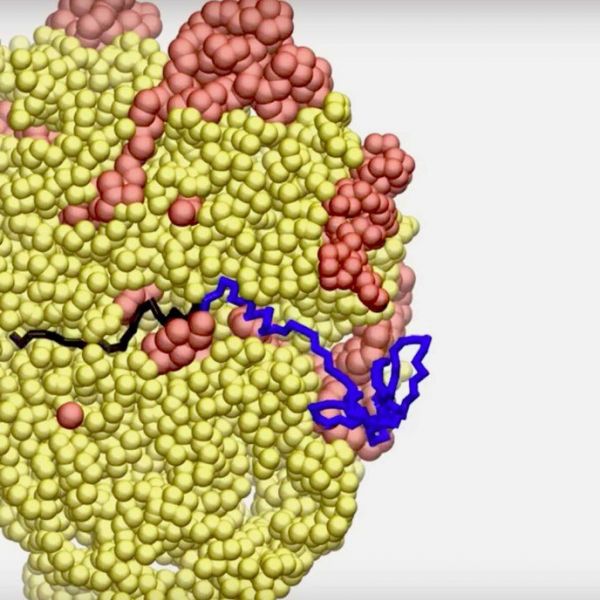
Researchers find features that shape mechanical force during protein synthesis
Like any assembly line, the body’s protein-building process generates a mechanical force as it produces these important cellular building blocks. Now, a team of researchers suggest they are one step closer to understanding that force. They also built a mathematical model to help guide scientists with future investigations into how the body creates proteins
Full Article
Feb 25, 2019
Summer Research Scholarships Available
The Center of Excellence in Industrial Biotechnology has established a new Summer Research Scholarship to support undergraduates doing research in the broad area of industrial biotechnology, including biopharmaceutical manufacturing, food biotechnology, and production of bio-based chemicals.
Full Article
Feb 25, 2019
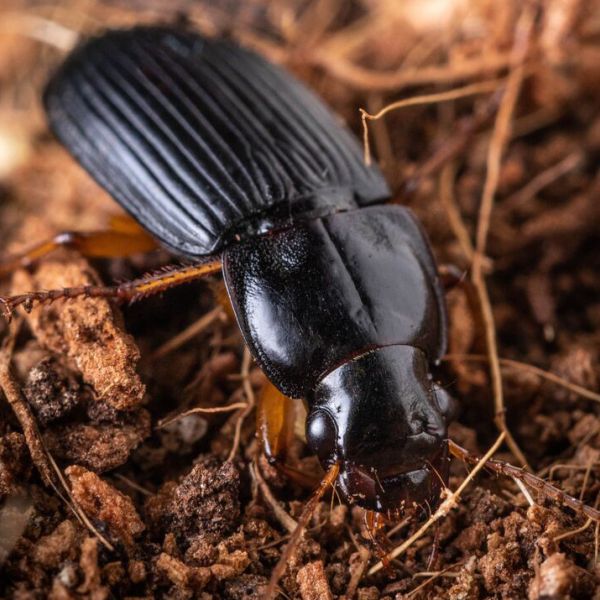
Material that shields beetle from being burned by its own weapons holds promise
Carabid beetles produce caustic chemicals they spray to defend themselves against predators, and the compound that protects their bodies from these toxic substances shows promise for use in bioengineering or biomedical applications, according to Penn State researchers.
Full Article
Feb 17, 2019
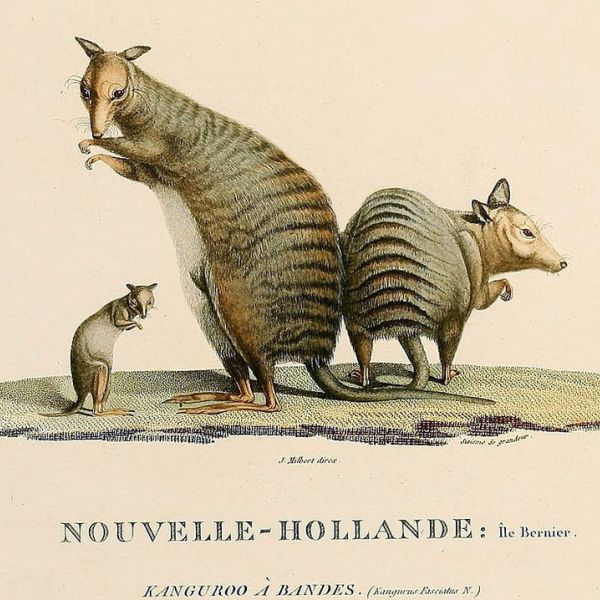
Indigenous hunters have positive impacts on food webs in desert Australia
Australia has the highest rate of mammal extinction in the world. Resettlement of indigenous communities resulted in the spread of invasive species, the absence of human-set fires, and a general cascade in the interconnected food web that led to the largest mammalian extinction event ever recorded. In this case, the absence of direct human activity on the landscape may be the cause of the extinctions, according to a Penn State anthropologist.
Full Article
Feb 13, 2019
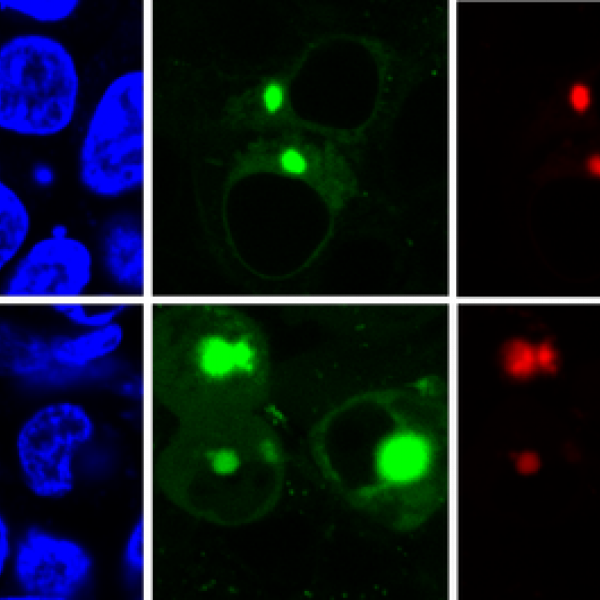
New method uses fluorescence to identify disease-causing forms of proteins
A new method uses fluorescence to detect potentially disease-causing forms of proteins as they unravel due to stress or mutations. A team of researchers from Penn State and the University of Washington reengineered a fluorescent compound and developed a method to simultaneously light up two different proteins as they misfold and aggregate inside a living cell, highlighting forms that likely play a role in several neurodegenerative diseases including Alzheimer’s and Parkinson’s.
Full Article

Feb 13, 2019
Troy Ott to discuss "the improbable series of events that led to your birth"
At this month’s "Science on Tap" event, Huck Associate Director and professor of reproductive biology Troy Ott will discuss viviparity — the development of an embryo inside the body leading to the birth of a live offspring. Viviparity is thought to have evolved from egg-laying animals. Ott's talk will focus on one of the enigmas of live birth that relates to the mother’s immune system.
Full Article

Feb 11, 2019
Toward automated animal identification in wildlife research
A new automated method to prepare digital photos for analysis will help wildlife researchers who depend on photographs to identify individual animals by their unique markings. A wildlife biologist from Penn State teamed up with scientists from Microsoft Azure, a cloud computing service, using machine learning technology to improve how photographs are turned into usable data for wildlife research. A paper describing the new technique appears online in the journal Ecological Informatics.
Full Article