News
Dec 19, 2018
Bacterial protein could help find materials for your next smartphone
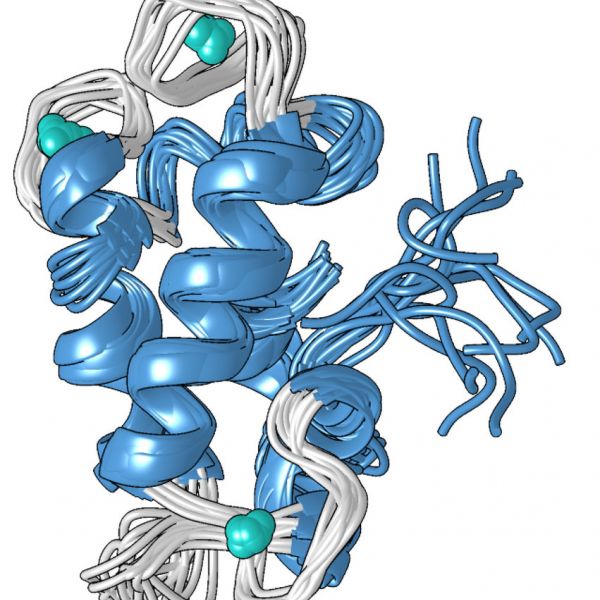
A newly discovered protein could help detect, target and collect from the environment the rare-earth metals used in smartphones. Two new studies by researchers at Penn State describe the protein, which is 100 million times better at binding to lanthanides — the rare-earth metals used in smartphones and other technologies — than to other metals like calcium.
Full Article
Dec 17, 2018
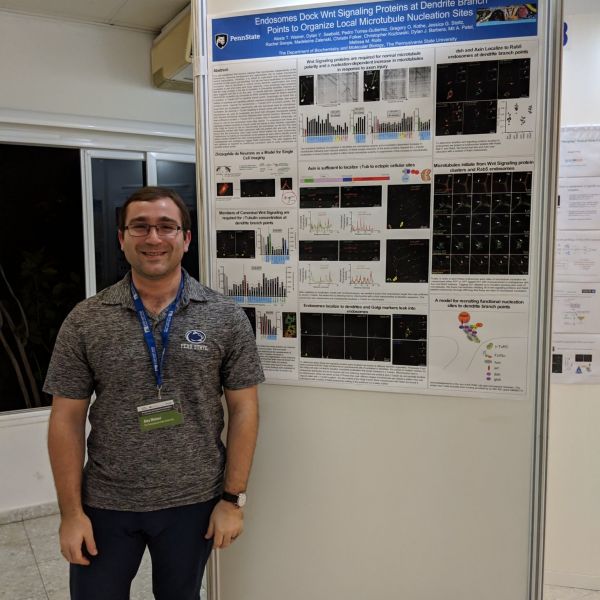
MCIBS student Alex Weiner takes home international poster award
"Endosomes Dock Wnt Signaling Proteins at Dendrite Branch Points to Organize Local Microtubule Nucleation Sites" won first prize at the 2018 Mechanisms of Neuronal Remodelling Conference in Ein Gedi, Israel.
Full Article

Dec 10, 2018
Andrew Zydney named recipient of Alan S. Michaels Award
Zydney's work has had a major impact on the design and development of important commercial membrane processes for the purification of monoclonal antibodies, which are used in treating cancer and other immunologic disorders.
Full Article

Dec 06, 2018
Unprecedented screen of 500,000 compounds reveals new candidates for malaria prevention drug
A new study, published December 7, 2018, in the journal Science by an international team of researchers including two from Penn State, reveals a new set of chemical starting points for the first drugs to prevent malaria instead of just treating its symptoms.
Full Article

Dec 06, 2018
Honavar named Fellow of the American Association for the Advancement of Science
Vasant G. Honavar, professor and Edward Frymoyer Chair of Information Sciences and Technology at Penn State, has been named a Fellow of the American Association for the Advancement of Science (AAAS). He was elected by the AAAS Section on Information, Computing, and Communication for his distinguished contributions to research and leadership in data science.
Full Article

Dec 05, 2018
Regular bedtimes and sufficient sleep for children may lead to healthier teens
Having a regular, age-appropriate bedtime and getting sufficient sleep from early childhood may be important for healthy body weight in adolescence, according to researchers at Penn State.
Full Article

Dec 03, 2018
Training grant supports graduate students studying gene regulation
A new $2.4 million-dollar program to train graduate students in the area of eukaryotic gene regulation (EGR) has been established at Penn State with funding from the National Institutes of General Medical Sciences of the U.S. National Institutes of Health and from Penn State matching support.
Full Article

Dec 03, 2018
Penn State earns 'Bee Campus USA' certification
Penn State has become the 55th educational institution in the nation to be certified as an affiliate of the Bee Campus USA program, designed to marshal the strength of educational campuses for the benefit of pollinators. The University Park campus joins more than 100 other cities and campuses across the country united in improving their landscapes for pollinators.
Full Article
Nov 29, 2018
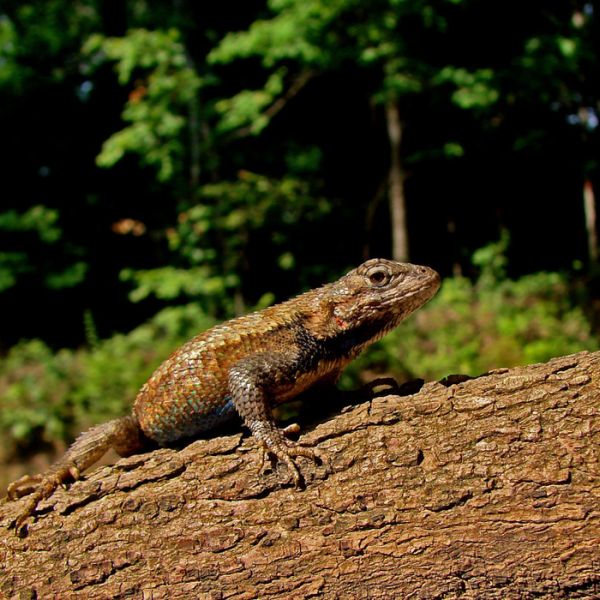
Lizards quickly adapt to threat from invasive fire ants
Some lizards in the eastern U.S. have adapted to invasive fire ants — which can bite, sting and kill lizards — reversing geographical trends in behavioral and physical traits used to avoid predators.
Full Article
Nov 29, 2018
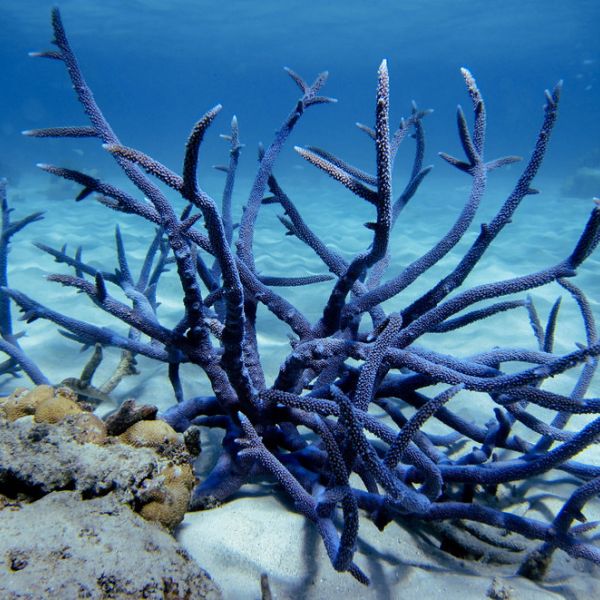
Corals and their microbiomes evolved together
Corals and the microorganisms they host have evolved together for hundreds of millions of years. Understanding this long-term relationship could add fresh insight to the fight to save the Earth’s embattled coral reefs, the planet’s largest and most significant structures of biological origin.
Full Article