News

Sep 30, 2019
Penn State community grieves loss of biologist Victoria Braithwaite
Victoria Braithwaite, a highly regarded expert on animal behavior and cognition and a much-loved friend and colleague, died today (Sept. 30) at the age of 52 after a battle with pancreatic cancer. She is survived by her two sons, James, 24, of Boulder, Colorado, and Matthew, 22, of Berlin, Germany, as well as her two grandchildren, Jonas Sean, 2, and Isla Viktoria, 3 months.
Full Article

Sep 25, 2019
Melissa Rolls appointed Paul Berg Professor of Biochemistry
Melissa Rolls, professor of biochemistry and molecular biology, has been named the Paul Berg Professor of Biochemistry. The professorship was created in 1995 by an anonymous donor in honor of Paul Berg, a 1948 Penn State graduate who was named a Distinguished Alumnus in 1974 and earned the Nobel Prize in 1980 for developing a method to map the structure and function of DNA.
Full Article

Sep 24, 2019
Patrick Drew named associate director of Penn State’s Neuroscience Institute
Drew succeeds David Vandenbergh in an important role promoting Neuroscience research and education at University Park.
Full Article
Sep 23, 2019
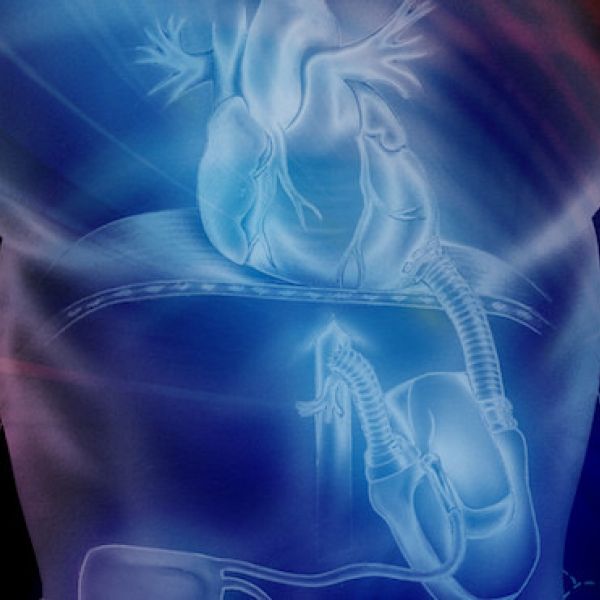
Penn State researchers receive grant to explore novel method of anticoagulation
Two Penn State biomedical engineering faculty members have received a two-year, $200,000 grant from the American Heart Association (AHA) to explore potential solutions to thrombosis, or blood clot formation, a prevalent issue with blood-contacting medical devices such as heart valves, blood pumps and cardiac stents.
Full Article
Sep 23, 2019
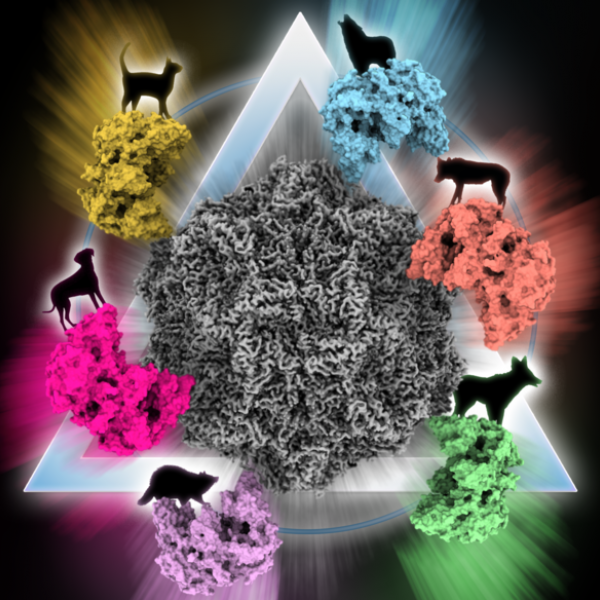
Virus may jump species through 'rock-and-roll' motion with receptors
Like a janitor thumbing through a keychain to find just the right key to open a lock, the "rock-and-roll" motion of the canine parvovirus during the binding process may help explain how the virus can find the spot on a receptor to infect not just dogs, but multiple species, according to an international team of researchers.
Full Article

Sep 23, 2019
New AI app predicts climate change stress for farmers in Africa
A new artificial intelligence (AI) tool available for free in a smartphone app can predict near-term crop productivity for farmers in Africa and may help them protect their staple crops — such as maize, cassava and beans — in the face of climate warming, according to Penn State researchers.
Full Article

Sep 20, 2019
Sleep deprivation may lead to slower metabolism, weight gain
Restricting sleep for just several days alters how we metabolize fats and changes how satisfied we are by a meal, according to new research conducted at Penn State and published in the Journal of Lipid Research.
Full Article

Sep 18, 2019
New tool in fight against malaria
Redesigning molecules originally developed to treat the skin disease psoriasis could lead to an effective new drug against malaria, according to an international team of researchers.
Full Article
Sep 17, 2019
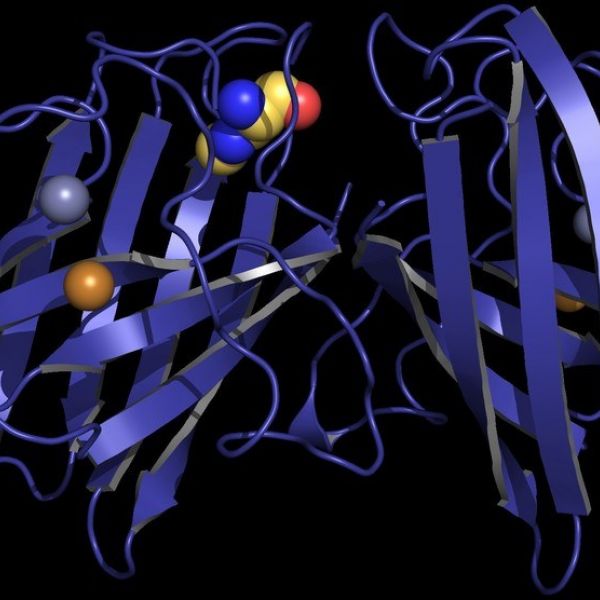
Research suggests how environmental toxin produced by algae may lead to ALS
Can a computer be used to explain why an environmental toxin might lead to neurodegenerative disease? According to Penn State College of Medicine researchers, a computer generated-simulation allowed them to see how a toxin produced by algal blooms in saltwater might cause Amyotrophic Lateral Sclerosis (ALS).
Full Article

Sep 17, 2019
Francesca Chiaromonte named Huck Chair in Statistics for the Life Sciences
Francesca Chiaromonte, professor of statistics at Penn State, was recently named Lloyd and Dorothy Foehr Huck Chair in Statistics by the University’s Huck Institutes of the Life Sciences.
Full Article