News
Jan 21, 2020
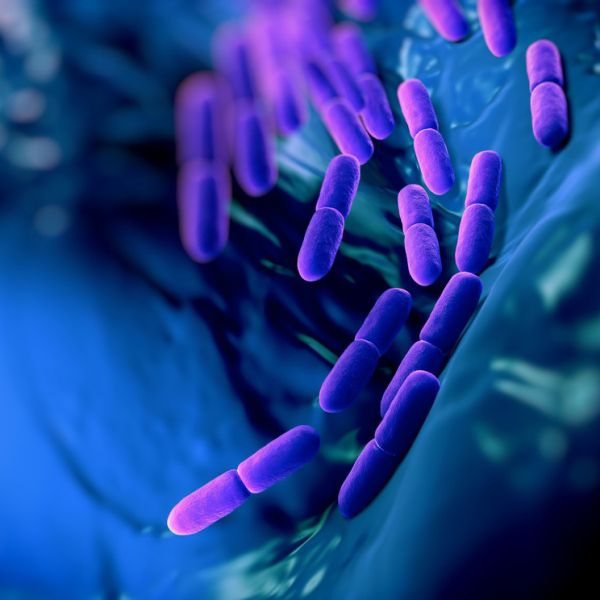
Persistent environmental contaminant changes the gut microbiome of mice
An industrial chemical — phased out since 2002, but previously used in stain and water-repellent products and firefighting foam — alters the gut microbiome of mice and could have implications for human health, according to an international team of researchers.
Full Article

Jan 21, 2020
Insecticides becoming more toxic to honey bees
Researchers discover that neonicotinoid seed treatments are driving a dramatic increase in insecticide toxicity in U.S. agricultural landscapes, despite evidence that these treatments have little to no benefit in many crops.
Full Article
Jan 20, 2020
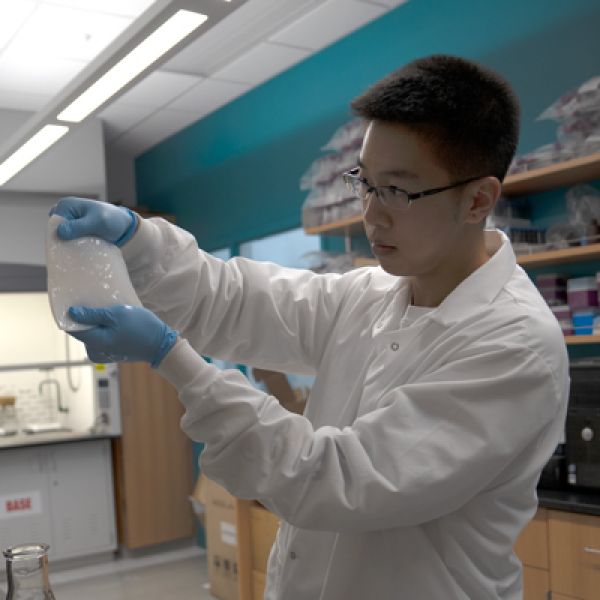
Center Seeks Proposals for 2020 IMPACT Seed Grants in Industrial Biotechnology
Students from all majors are welcome to apply although they must partner with a faculty or staff member as Principal Investigator.
Full Article
Jan 07, 2020
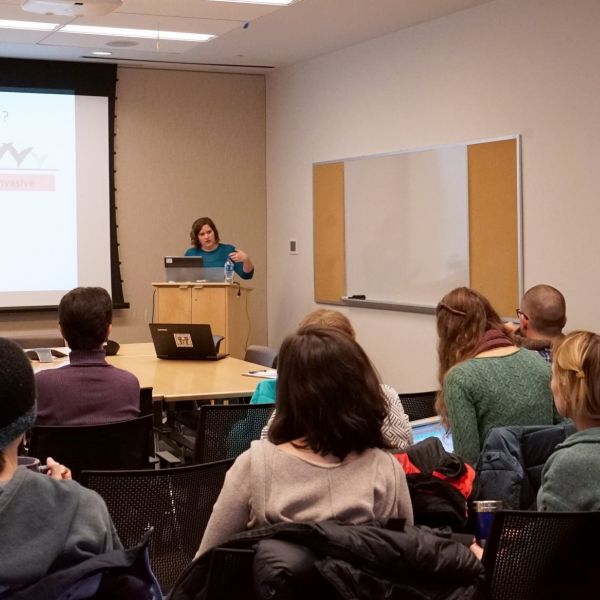
Growth of Microbiome Centers Noted In Nature Microbiology.
Penn State has committed to hiring almost two dozen new faculty members to study the microbiome since the creation of its own center.
Full Article

Jan 03, 2020
Water lily genome expands picture of the early evolution of flowering plants
The newly reported genome sequence of a water lily sheds light on the early evolution of angiosperms, the group of all flowering plants. An international team of researchers, including scientists at Penn State, used high-throughput next-generation sequencing technology to read out the water lily’s (Nymphaea colorata) genome and transcriptome — the set of all genes expressed as RNAs.
Full Article

Jan 02, 2020
Weight-loss plan developed at Penn State ties for No. 2 ranking
If eating healthier is on your list of New Year’s resolutions, you may need to look no further than Volumetrics, a diet developed by Penn State Professor of Nutrition Barbara Rolls that has tied for the No. 2 weight-loss plan in this year’s U.S. News & World Report's "Best Diets."
Full Article
Dec 20, 2019
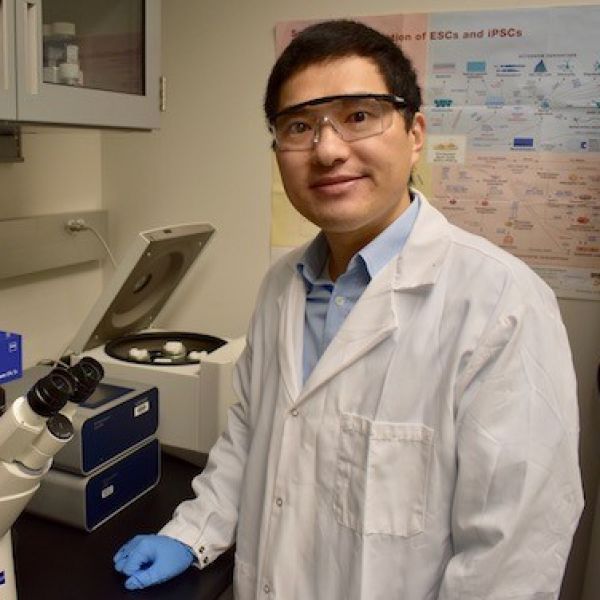
Penn State researcher receives a Rising Star Award in biomedical engineering
Xiaojun “Lance” Lian, assistant professor of biomedical engineering at Penn State, has been named one of the 2020 Rising Star Award recipients in stem cell engineering by the Biomedical Engineering Society’s (BMES) Cellular and Molecular Bioengineering Special Interest Group (CMBE SIG).
Full Article

Dec 18, 2019
LiveB1G: Infectious Disease Forecasting
As part of its LiveB1G series, the Big Ten Network has featured Penn State professor Steven Schiff, who leads an interdisciplinary team that applies weather forecast modeling to forecast infection risk in infants, providing the opportunity to diagnose diseases in children that cannot be diagnosed with existing technology.
Full Article

Dec 17, 2019
Agricultural parasite avoids evolutionary arms race, shuts down genes of host
A parasitic plant has found a way to circumvent an evolutionary arms race with the host plants from which it steals nutrients, allowing the parasite to thrive on a variety of agriculturally important plants. The parasite dodder, an agricultural pest found on every continent, sends genetic material into its host to shut down host defense genes.
Full Article

Dec 17, 2019
New tool reveals DNA structures that influence disease
Disruption of certain DNA structures — called topologically associating domains, or TADs — is linked with the development of disease, including some cancers. With its newly created algorithm that quickly locates and helps elucidate the complex functions of TADs, an international team of researchers is making it easier to study these important structures and help prevent disease.
Full Article