News
Feb 01, 2021
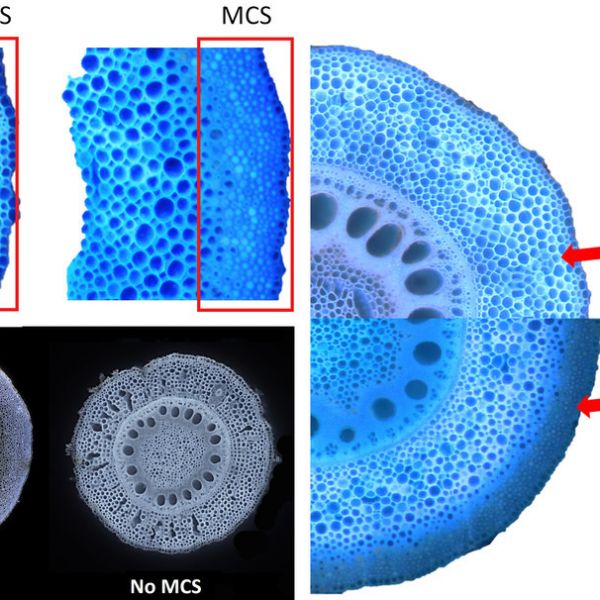
Newly discovered trait helps plants grow deeper roots in dry, compacted soils
A previously unknown root trait allows some cereal plants to grow deeper roots capable of punching through dry, hard, compacted soils, according to Penn State researchers, who suggest that harnessing the inherited characteristic could lead to crops better able to deal with a changing climate.
Full Article
Feb 01, 2021
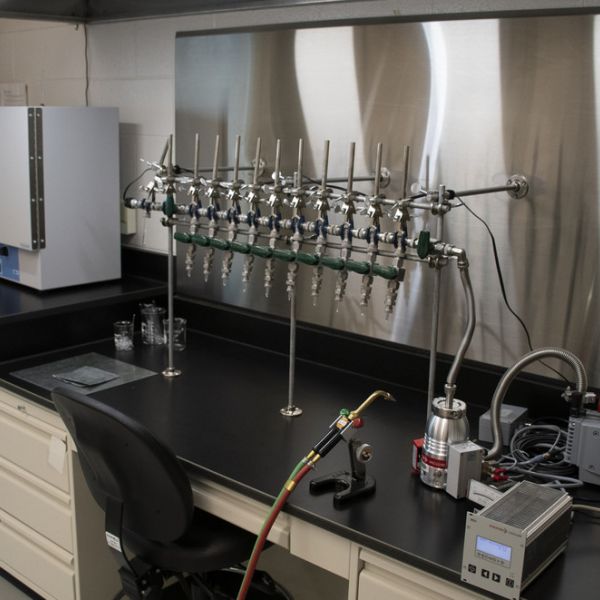
Student funding available for laboratory research
The Energy and Environmental Sustainability Laboratories (EESL) announced its 2020-21 funding opportunity for Penn State students. The program, called EESL Green, is now accepting proposals for funding that will support energy and environment, materials and fermentation laboratory research.
Full Article

Jan 28, 2021
Ecology Institute to hold pitch slam for funding competition
The Ecology Institute announced a funding competition for its annual Flower Grant for Ecological Research. The events, which will take place as virtual pitch slams, will occur from noon to 1 p.m. on March 9 and 10. The Ecology Institute is inviting researchers who are seeking funding to participate.
Full Article

Jan 28, 2021
Infants exposed to second-hand smoke may develop behavior problems later in life
When parents think of baby-proofing, they may think of baby gates and outlet covers, but there might be something less obvious to consider: whether previous occupants of their home were smokers. According to a National Institutes of Health-funded study by researchers at Penn State and the University of North Carolina at Chapel Hill (UNC), babies can be exposed to nicotine left behind in the home.
Full Article

Jan 28, 2021
Two members of Eberly College honored for extraordinary efforts during pandemic
Matthew Ferrari, Huck Career Development Professor and Associate Professor of Biology, was one of two people honored with Dean’s Special Awards for their efforts to support the Eberly College of Science and the University in response to COVID-19.
Full Article

Jan 27, 2021
Therapeutic cell researcher joins biomedical engineering and Huck Institutes
Yuguo “Leo” Lei joined the Penn State Department of Biomedical Engineering as an associate professor and the Huck Institutes of the Life Sciences as the inaugural faculty director of the Sartorius Cell Culture Facility in a joint appointment on Jan. 1.
Full Article
Jan 22, 2021
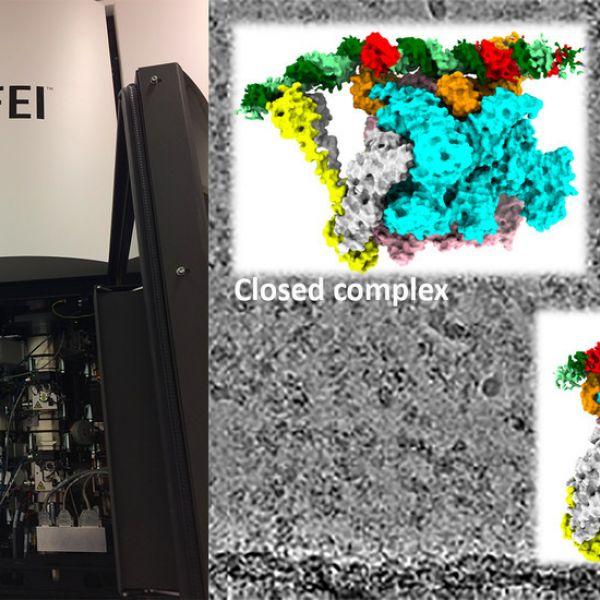
Regulating the ribosomal RNA production line
Cryo-electron microscopy study allows researchers to visualize structural changes in an E. coli enzyme synthesizing ribosomal RNA that shift it between turbo- and slow-modes depending on the bacteria’s growth rate
Full Article

Jan 21, 2021
Sartorius Stedim Biotech’s $1.5M gift creates cell culture facility
Sartorius Stedim Biotech, a leading international partner of the biopharmaceutical industry, has committed $1.5 million to Penn State to create the Sartorius Cell Culture Facility, which will expand Penn State’s biotechnology ecosystem.
Full Article
Jan 21, 2021
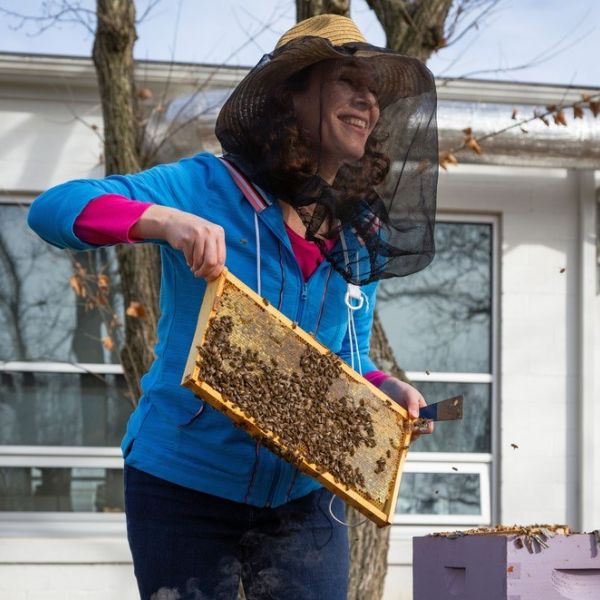
Grozinger receives National Academy's Prize in Food and Agriculture Sciences
Christina Grozinger, Publius Vergilius Maro Professor of Entomology in Penn State's College of Agricultural Sciences, will be honored by the National Academy of Sciences for helping the world understand how to address the crisis of global declines in pollinator populations.
Full Article

Jan 20, 2021
Two Ecology Grad Students Win College of Ag Sci Grants
Two members of the Huck's Ecology graduate program were among the ten winners of the College of Agricultural Sciences' Graduate Student Competitive Grants Program.
Full Article