News
Feb 12, 2025
Sainburg named fellow of the National Academy of Kinesiology
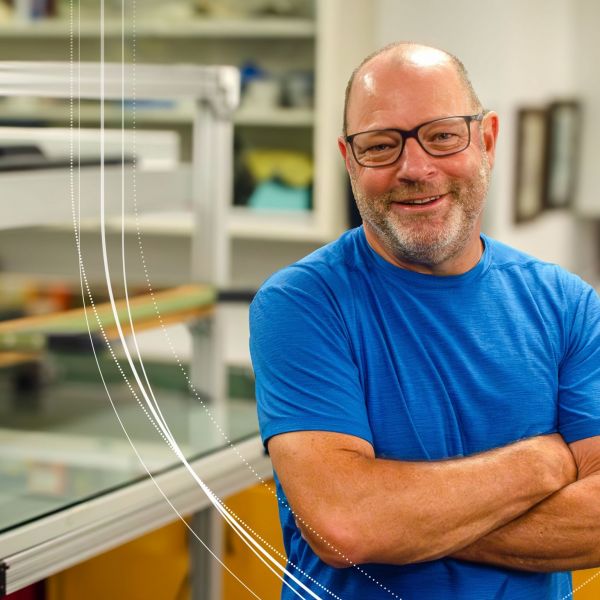
Robert Sainburg, professor of kinesiology and neurology at Penn State and Dorothy F. and J. Lloyd Huck Distinguished Chair in Kinesiology and Neurology, was recently named a fellow of the National Academy of Kinesiology.
Full Article
Dec 17, 2024
Person-centered, bio-inspired research leads to improved control of prosthetics
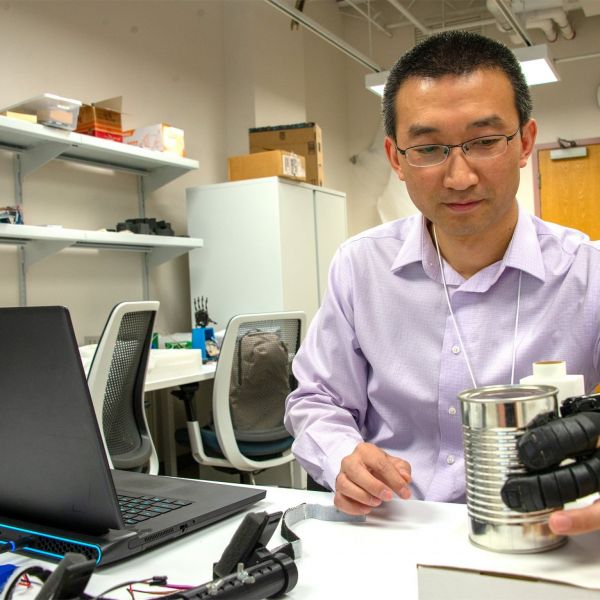
Penn State researcher focuses on creating wearable assistive robotic systems for people with limited use of their limbs, especially their hands, with the goal of the user intuitively controlling the systems and devices on which they rely.
Full Article
Jul 22, 2024
Alternative understanding of brain leads to new treatments for stroke patients
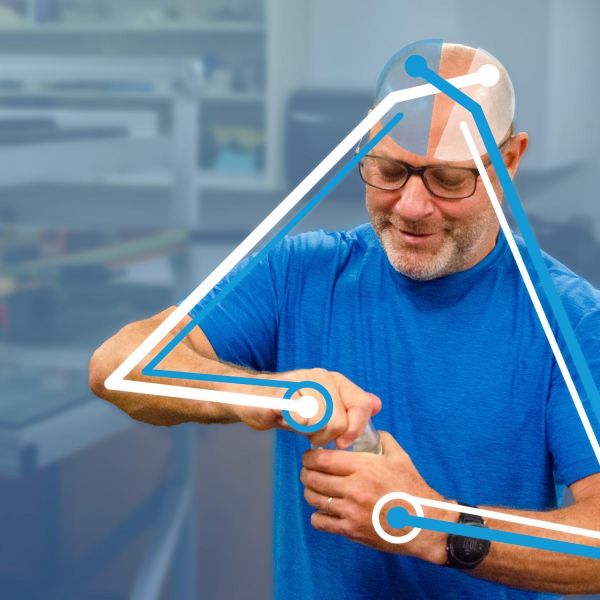
Since the early 20th century, researchers believed that movements on the right and left sides of the body were controlled by the opposite hemisphere of the brain. However, Penn State researcher Robert Sainburg proposed the complimentary dominance hypothesis, which states that both sides of the brain have a role to play in control of both sides of the body.
Full Article
Jan 30, 2024
$4M grant funds project to make robotic prostheses more like biological limbs
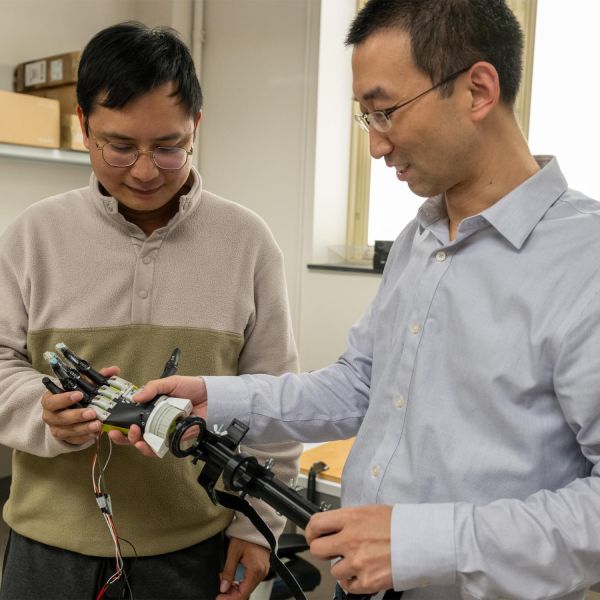
Prosthetic hands that incorporate robotics can perform dexterous self-care tasks, but they are often hard to operate, requiring a user’s constant attention with a limited number of hand functions. With a five-year, $4 million U.S. National Science Foundation grant, Penn State researchers aim to make robotic protheses more useful for people living with amputations.
Full Article

Oct 14, 2021
Robert Sainburg named Huck Chair in Kinesiology and Neurology
Robert “Bob” Sainburg, professor of kinesiology and of neurology and director of the Huck Institutes’ Center for Movement Science and Technology, has been named Huck Distinguished Chair in Kinesiology and Neurology.
Full Article

Sep 15, 2021
Assistant professor intends to bridge gap between humans and robots
Katie Fitzsimons will join the Penn State College of Engineering’s Department of Mechanical Engineering (ME) as an assistant professor in January 2021. Through her research, Fitzsimons plans to advance robotics, powered by a greater understanding of human motion and behavior.
Full Article

Jul 30, 2019
The Other Hand
When it comes to therapy for stroke patients, sometimes treating the wrong hand is exactly right.
Full Article
Sep 15, 2021
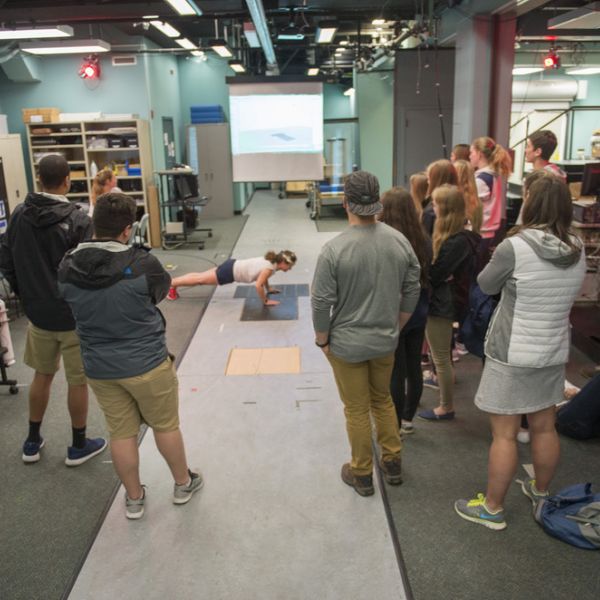
High school students learn about biomechanics
In honor of National Biomechanics Day on April 7, the Department of Kinesiology hosted 60 State College Area High School students in the Biomechanics Laboratory in Rec Hall to showcase its research and facilities, in such areas as muscle movement and motion analysis.
Full Article
Sep 15, 2021
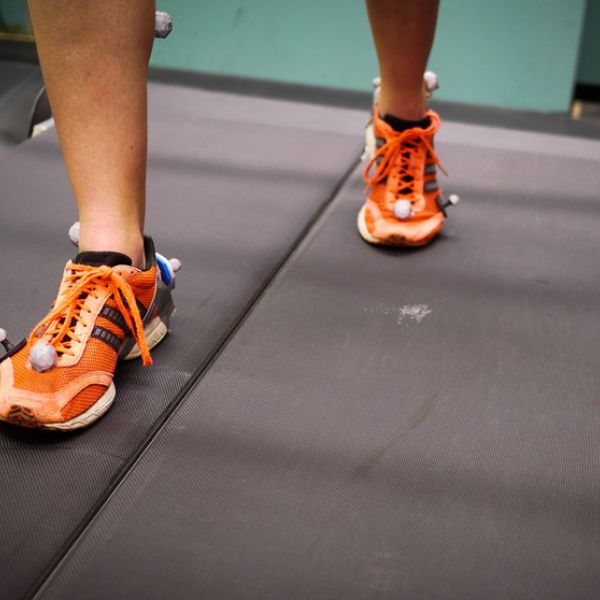
Chasing the Six Million Dollar Man
When Steve Piazza was a kid, he was fascinated by "The Six Million Dollar Man." The '70s TV show followed an astronaut who, after a crash, was given bionic limbs and a bionic eye. For Piazza, the show did more than just entertain -- it captured his imagination and set the stage for the rest of his life.
Full Article
Jul 29, 2013
Huck Institutes seek new Associate Directors for positions in science leadership
The Huck Institutes wish to appoint a series of new Associate Directors to work with the management team and help in developing new initiatives.
Full Article