News
Apr 05, 2019
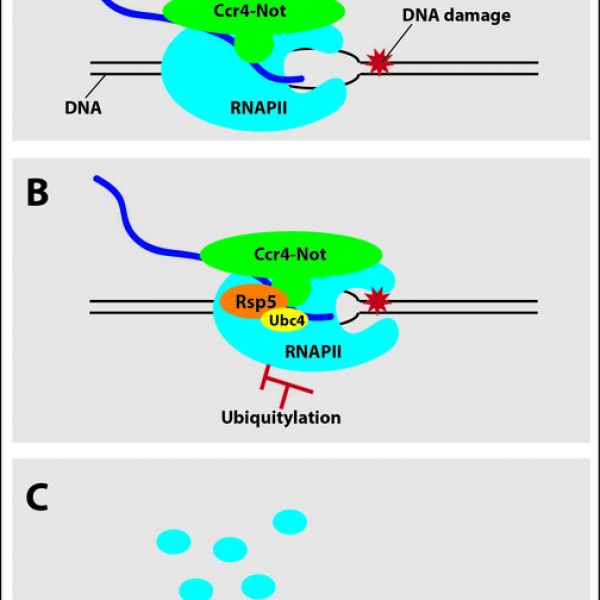
Unjamming the genome after DNA damage
A protein complex that is involved in nearly every step in the regulatory control of gene expression in cells has now been shown also to play a key role in clearing potential traffic jams in the production of RNA.
Full Article
Apr 03, 2019
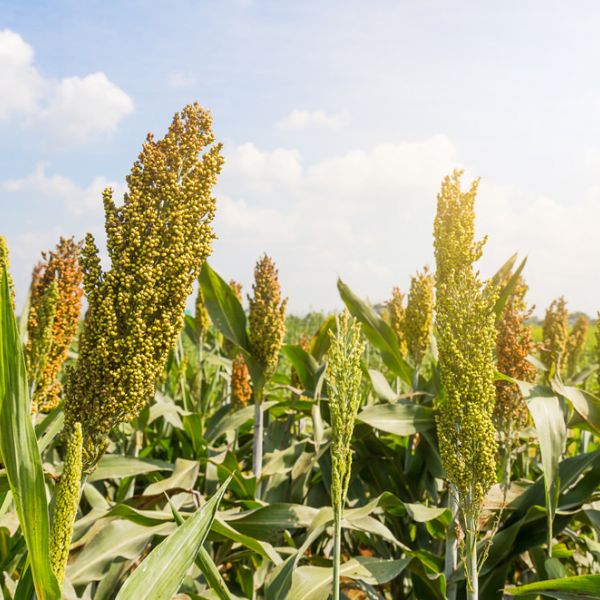
Insect-deterring sorghum compounds may be eco-friendly pesticide
Compounds produced by sorghum plants to defend against insect feeding could be isolated, synthesized and used as a targeted, nontoxic insect deterrent, according to researchers who studied plant-insect interactions that included field, greenhouse and laboratory components.
Full Article
Apr 03, 2019
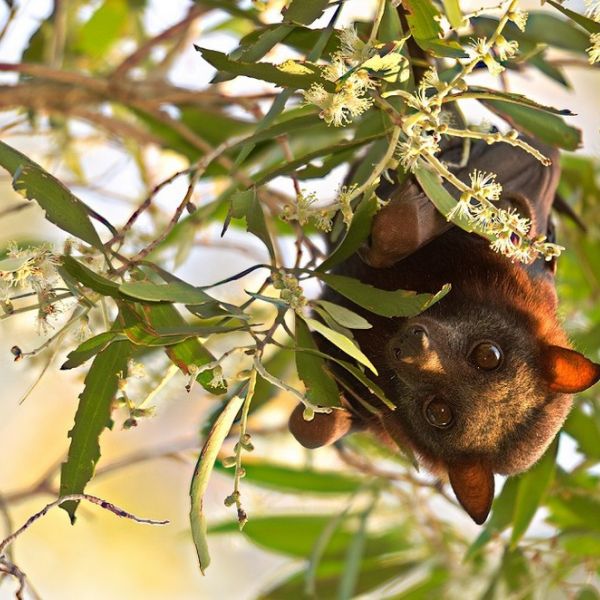
Project to prevent bat-borne diseases receives $10 million funding
In an effort to prevent the spread of some of the world's most lethal diseases, an international research team spanning five continents and including scientists from Penn State will study bats in Australia, Bangladesh, Madagascar and Ghana.
Full Article

Apr 02, 2019
Shea recognized with 2019 Palmer Faculty Mentoring Award
Katriona Shea, alumni professor of biology in the Eberly College of Science, is the recipient of Penn State's 2019 Howard B. Palmer Faculty Mentoring Award. The award honors and recognizes outstanding achievement by a faculty member with at least five years of service who effectively guides junior faculty.
Full Article

Apr 02, 2019
Michael Axtell Among Five Receiving Faculty Scholar Medals
Five Penn State faculty members have received 2019 Faculty Scholar Medals for Outstanding Achievement for excellence in scholarship, research and the arts.
Full Article

Apr 02, 2019
Guiltinan, Maximova receive the 2019 Kopp International Achievement Award
Mark Guiltinan, professor of plant molecular biology, and Siela Maximova, research professor of plant biotechnology, both in the College of Agricultural Sciences, are the recipients of Penn State's 2019 W. LaMarr Kopp International Achievement Award.
Full Article

Apr 02, 2019
'AI will see you now': Panel to discuss the AI revolution in health and medicine
This month’s CyberScience Seminar, organized by the Institute for CyberScience (ICS), will be held from 1:30–3 p.m. on Thursday, April 11, in 233B HUB-Robeson Center and will feature a panel of Penn State experts who will discuss the benefits — and the risks — of using AI in the healthcare industry.
Full Article

Apr 02, 2019
Scientists discover hundreds more genes with potential link to addictions
Many human diseases, such as tobacco and alcohol addictions, are heritable. Until now, little has been known about what genetic factors contribute to these addictions, and if they put people at risk of inheriting other medical conditions. A recent study, published in Nature Genetics, reveals that these addictions may result from a complex blend of genes and environmental influences, and are genetically correlated to other health issues and diseases.
Full Article

Apr 01, 2019
New Penn State curriculum to be featured nationally on PBS show
A new genetics and genealogy curriculum co-developed by Nina Jablonski, Evan Pugh University Professor of Anthropology and director of the Center for Human Evolution and Diversity in the College of the Liberal Arts, will be featured on PBS' "Finding Your Roots with Henry Louis Gates, Jr." on April 9.
Full Article

Apr 01, 2019
Huck Institutes Seeks Assistant Director of Graduate Education, Training, and Diversity
The Huck Institutes of the Life Sciences is seeking an energetic Penn State tenured graduate faculty member with a proven background in teaching and mentoring graduate students to serve as the Assistant Director of Graduate Education, Training and Diversity.
Full Article